
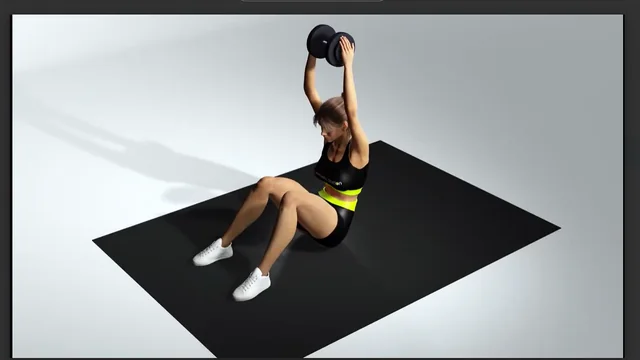
How to perform it
- Lie on your back on the mat with your knees bent and feet flat on the floor.
- In the starting position, hold the dumbbell with both hands overhead, keeping your arms extended and stable throughout the movement.
- To stabilize your body, engage your abs by gently drawing your navel toward your spine.
- Then raise your torso with control, lifting your shoulder blades off the floor without losing neck alignment.
- Throughout the set, keep the dumbbell steady overhead as you rise, avoiding momentum from the arms.
- Return slowly to the starting position without fully relaxing your abs between repetitions.
What you should feel
A more noticeable abdominal contraction, especially in the upper abs. Greater core demand to stabilize the weight, without pain in the lower back, neck, or shoulders.
Groups mentioned in the description
Exercise questions
Lie on your back on the mat with your knees bent and feet flat on the floor. In the starting position, hold the dumbbell with both hands overhead, keeping your arms extended and stable throughout the movement. To stabilize your body, engage your abs by gently drawing your navel toward your spine. Then raise your torso with control, lifting your shoulder blades off the floor without losing neck alignment. Throughout the set, keep the dumbbell steady overhead as you rise, avoiding momentum from the arms. Return slowly to the starting position without fully relaxing your abs between repetitions.
Abdominal variation with the dumbbell held overhead, increasing the demand on the abs and core stabilization.
A more noticeable abdominal contraction, especially in the upper abs. Greater core demand to stabilize the weight, without pain in the lower back, neck, or shoulders.
The guidance above organizes the content from the Athletic Station exercise base. Adapt the movement to your individual condition and stop if you experience pain.