
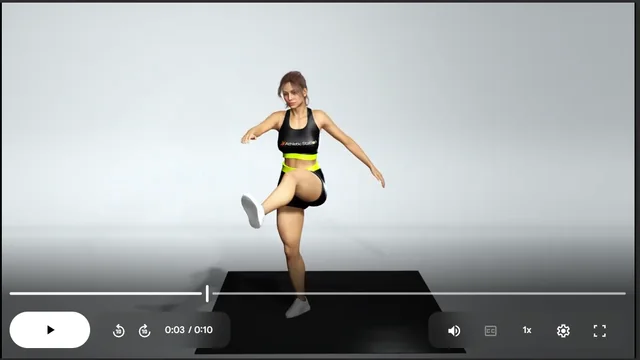
How to perform it
- Start in a high plank with your hands on the floor directly below your shoulders.
- Keep your arms extended, abs engaged, and body in a straight line from head to feet.
- Begin by bringing one knee toward your chest with control.
- Return that leg to the starting position and repeat with the opposite side.
- Continue alternating your legs at a steady pace, as if running in a plank position.
- Keep your hips stable and avoid raising them too high or letting your lower back sag.
- Keep the balls of your feet light on the floor while maintaining control of the movement.
- Breathe continuously and keep a rhythmic breathing pattern throughout the exercise.
What you should feel
Greater activation of the core, shoulders, and legs, with an increase in heart rate. Cardiovascular and muscular effort occur at the same time, without pain in the wrists, lower back, or shoulders.
Groups mentioned in the description
Exercise questions
Start in a high plank with your hands on the floor directly below your shoulders. Keep your arms extended, abs engaged, and body in a straight line from head to feet. Begin by bringing one knee toward your chest with control. Return that leg to the starting position and repeat with the opposite side. Continue alternating your legs at a steady pace, as if running in a plank position. Keep your hips stable and avoid raising them too high or letting your lower back sag. Keep the balls of your feet light on the floor while maintaining control of the movement. Breathe continuously and keep a rhythmic breathing pattern throughout the exercise.
Dynamic plank with alternating knees toward the torso to work the core, shoulders, legs, and cardiovascular conditioning at a continuous pace.
Greater activation of the core, shoulders, and legs, with an increase in heart rate. Cardiovascular and muscular effort occur at the same time, without pain in the wrists, lower back, or shoulders.
The guidance above organizes the content from the Athletic Station exercise base. Adapt the movement to your individual condition and stop if you experience pain.