
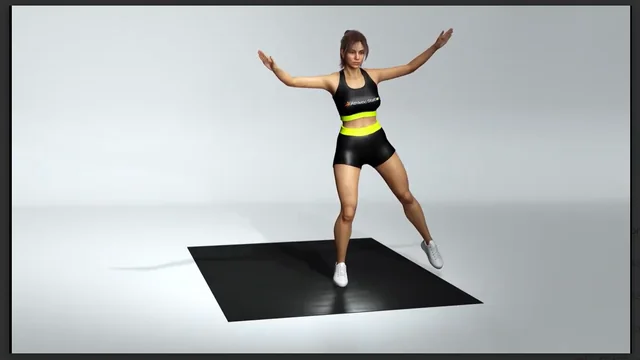
How to perform it
- Stand with your spine upright, abs engaged, and feet together or slightly apart.
- Begin with your arms extended at your sides.
- Jump and move your legs out to the sides.
- At the same time, raise your arms out to the sides and overhead.
- Jump again to return to the starting position, bringing your legs together and lowering your arms in coordination.
- Keep your torso stable and your knees slightly bent throughout the set to absorb impact more effectively.
- Land lightly on your feet, avoiding hard impact on each repetition.
- Breathe continuously and maintain a steady breathing rhythm throughout the exercise.
What you should feel
Work in the legs, shoulders, arms, and core, with an increase in heart rate. Continuous aerobic effort, without pain in the knees, ankles, shoulders, or lower back.
Groups mentioned in the description
Exercise questions
Stand with your spine upright, abs engaged, and feet together or slightly apart. Begin with your arms extended at your sides. Jump and move your legs out to the sides. At the same time, raise your arms out to the sides and overhead. Jump again to return to the starting position, bringing your legs together and lowering your arms in coordination. Keep your torso stable and your knees slightly bent throughout the set to absorb impact more effectively. Land lightly on your feet, avoiding hard impact on each repetition. Breathe continuously and maintain a steady breathing rhythm throughout the exercise.
Aerobic arm-and-leg movement that develops the core, shoulders, legs, cardiovascular conditioning, and coordination.
Work in the legs, shoulders, arms, and core, with an increase in heart rate. Continuous aerobic effort, without pain in the knees, ankles, shoulders, or lower back.
The guidance above organizes the content from the Athletic Station exercise base. Adapt the movement to your individual condition and stop if you experience pain.