
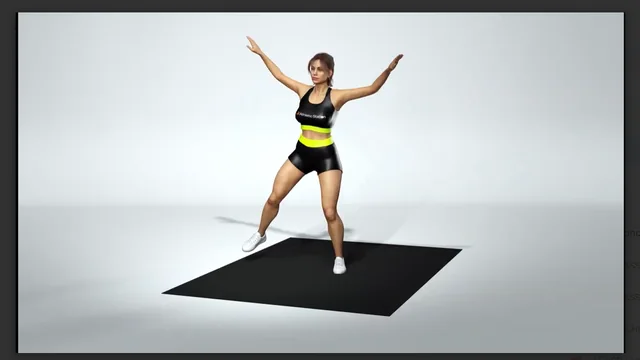
How to perform it
- Stand with your feet shoulder-width apart and your arms at your sides.
- Keep your abs engaged, chest open, and posture stable throughout the movement.
- Perform a light jump while simultaneously raising your arms overhead.
- Land softly with your knees slightly bent to absorb the impact.
- Return your arms to the starting position and repeat the movement in sequence.
- Maintain a steady rhythm without losing control of your posture.
- Exhale during the jump and inhale as you return to the floor.
- Continue smoothly while avoiding excessive impact on the joints.
What you should feel
Work in the legs, shoulders, and core, with an increase in heart rate. Cardiovascular effort and motor coordination, without pain in the knees, ankles, or lower back.
Groups mentioned in the description
Exercise questions
Stand with your feet shoulder-width apart and your arms at your sides. Keep your abs engaged, chest open, and posture stable throughout the movement. Perform a light jump while simultaneously raising your arms overhead. Land softly with your knees slightly bent to absorb the impact. Return your arms to the starting position and repeat the movement in sequence. Maintain a steady rhythm without losing control of your posture. Exhale during the jump and inhale as you return to the floor. Continue smoothly while avoiding excessive impact on the joints.
Dynamic jumping exercise that works the core, shoulders, and legs while improving cardiovascular conditioning through coordination, propulsion, and controlled landing.
Work in the legs, shoulders, and core, with an increase in heart rate. Cardiovascular effort and motor coordination, without pain in the knees, ankles, or lower back.
The guidance above organizes the content from the Athletic Station exercise base. Adapt the movement to your individual condition and stop if you experience pain.