
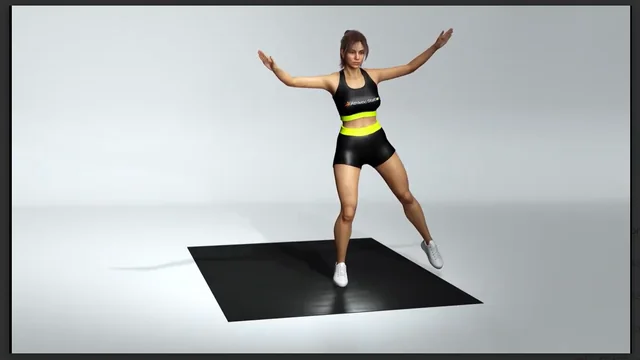
How to perform it
- Stand with your feet at a comfortable width, knees slightly bent, and abs engaged.
- Keep your torso slightly inclined forward and your arms free to assist with propulsion and balance.
- Jump to one side, moving your body laterally with control.
- Land with the knee slightly bent, absorbing the impact with control.
- Then push through the floor and jump to the opposite side, continuing to alternate.
- Keep your torso firm throughout the exercise and avoid allowing your knees to collapse inward.
- Use your arms to assist coordination and stability with each change of direction.
- Exhale during the jump and maintain rhythmic breathing throughout the exercise.
What you should feel
Greater activation of the legs, core, and cardiovascular system, with a strong demand for coordination and agility. Continuous aerobic effort, without pain in the knees, ankles, hips, or lower back.
Groups mentioned in the description
Exercise questions
Stand with your feet at a comfortable width, knees slightly bent, and abs engaged. Keep your torso slightly inclined forward and your arms free to assist with propulsion and balance. Jump to one side, moving your body laterally with control. Land with the knee slightly bent, absorbing the impact with control. Then push through the floor and jump to the opposite side, continuing to alternate. Keep your torso firm throughout the exercise and avoid allowing your knees to collapse inward. Use your arms to assist coordination and stability with each change of direction. Exhale during the jump and maintain rhythmic breathing throughout the exercise.
Dynamic jumping exercise that works the core and legs while improving cardiovascular conditioning through coordination, propulsion, and controlled landing.
Greater activation of the legs, core, and cardiovascular system, with a strong demand for coordination and agility. Continuous aerobic effort, without pain in the knees, ankles, hips, or lower back.
The guidance above organizes the content from the Athletic Station exercise base. Adapt the movement to your individual condition and stop if you experience pain.