
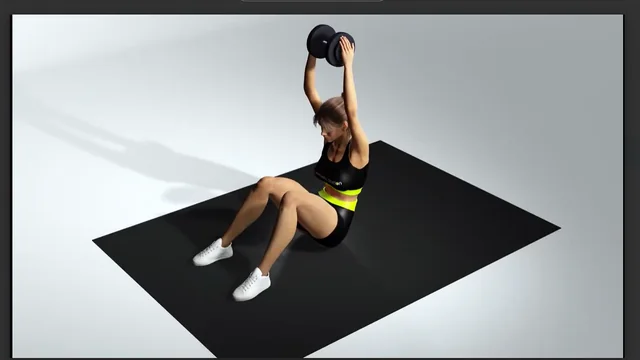
How to perform it
- Lie on your side on the mat, support one hand on the floor, and position the knee of your lower leg as the base of support.
- Keep the upper leg extended, your torso aligned, and a dumbbell resting against the side of your hip.
- Engage your abs and keep your neck aligned with your spine throughout the movement.
- Raise your hips off the floor, creating a stable line through the shoulder, torso, and extended leg.
- Maintain firm support through your hand and knee without allowing your body to rotate forward or backward.
- Hold the raised position briefly while controlling both the load and your posture.
- Lower your hips slowly until they are close to the floor without fully relaxing between repetitions.
- Exhale as you raise your hips and inhale as you lower.
What you should feel
Work in the core, especially the muscles along the side of the abdomen and hip, with the glutes assisting with stabilization. The effort should remain controlled along the side of the torso and hip, without pain in the shoulder, lower back, or supporting knee.
Groups mentioned in the description
Exercise questions
Lie on your side on the mat, support one hand on the floor, and position the knee of your lower leg as the base of support. Keep the upper leg extended, your torso aligned, and a dumbbell resting against the side of your hip. Engage your abs and keep your neck aligned with your spine throughout the movement. Raise your hips off the floor, creating a stable line through the shoulder, torso, and extended leg. Maintain firm support through your hand and knee without allowing your body to rotate forward or backward. Hold the raised position briefly while controlling both the load and your posture. Lower your hips slowly until they are close to the floor without fully relaxing between repetitions. Exhale as you raise your hips and inhale as you lower.
Hip elevation and stabilization exercise that works the abs and glutes while keeping the torso firm throughout the movement.
Work in the core, especially the muscles along the side of the abdomen and hip, with the glutes assisting with stabilization. The effort should remain controlled along the side of the torso and hip, without pain in the shoulder, lower back, or supporting knee.
The guidance above organizes the content from the Athletic Station exercise base. Adapt the movement to your individual condition and stop if you experience pain.