
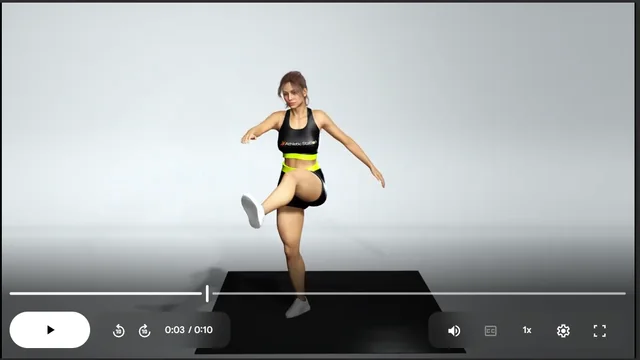
How to perform it
- Lie on your back on a mat with your knees bent, feet supported on the floor, and arms extended at your sides.
- Keep your feet about hip-width apart and close enough to your body to allow a stable ascent.
- Engage your abs and press your heels into the floor before starting the movement.
- Raise your hips with control until your shoulders, hips, and knees form a line.
- Focus the effort on your glutes rather than driving through your lower back.
- Briefly hold the contraction at the top of the movement.
- Slowly return to the starting position, lowering your hips with control until they are close to the floor.
- Exhale as you raise your hips and inhale as you return.
What you should feel
Greater activation of the glutes, with the hamstrings and core assisting with stabilization. The contraction should remain controlled around the hips, without pain in the lower back, knees, or hips.
Groups mentioned in the description
Exercise questions
Lie on your back on a mat with your knees bent, feet supported on the floor, and arms extended at your sides. Keep your feet about hip-width apart and close enough to your body to allow a stable ascent. Engage your abs and press your heels into the floor before starting the movement. Raise your hips with control until your shoulders, hips, and knees form a line. Focus the effort on your glutes rather than driving through your lower back. Briefly hold the contraction at the top of the movement. Slowly return to the starting position, lowering your hips with control until they are close to the floor. Exhale as you raise your hips and inhale as you return.
Hip elevation and stabilization exercise that works the core, glutes, and hamstrings while keeping the torso firm throughout the movement.
Greater activation of the glutes, with the hamstrings and core assisting with stabilization. The contraction should remain controlled around the hips, without pain in the lower back, knees, or hips.
The guidance above organizes the content from the Athletic Station exercise base. Adapt the movement to your individual condition and stop if you experience pain.