
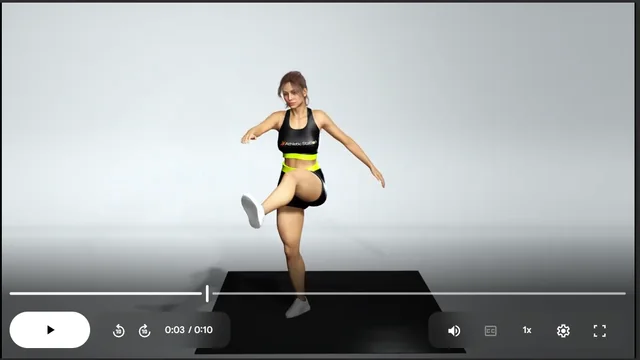
How to perform it
- Stand on an elevated platform with the balls of your feet supported and your heels free to lower.
- Hold a dumbbell in each hand at your sides, keeping your spine upright, abs engaged, and gaze forward.
- Keep your feet aligned and your body stable throughout the movement.
- Raise your heels with control until you are standing on the balls of your feet.
- Rise through a comfortable range and strongly contract your calves at the top.
- Lower your heels slowly below the level of the platform, using the available range of motion with control.
- Avoid swaying your torso or using momentum to rise.
- Exhale as you raise your heels and inhale as you lower.
What you should feel
Greater calf activation, with an increased stretch and contraction because the exercise is performed on an elevated surface. The effort should remain controlled in the lower legs, without pain in the ankles, knees, or arches of the feet.
Groups mentioned in the description
Exercise questions
Stand on an elevated platform with the balls of your feet supported and your heels free to lower. Hold a dumbbell in each hand at your sides, keeping your spine upright, abs engaged, and gaze forward. Keep your feet aligned and your body stable throughout the movement. Raise your heels with control until you are standing on the balls of your feet. Rise through a comfortable range and strongly contract your calves at the top. Lower your heels slowly below the level of the platform, using the available range of motion with control. Avoid swaying your torso or using momentum to rise. Exhale as you raise your heels and inhale as you lower.
Heel raise that works the calves with control during both the upward and return phases.
Greater calf activation, with an increased stretch and contraction because the exercise is performed on an elevated surface. The effort should remain controlled in the lower legs, without pain in the ankles, knees, or arches of the feet.
The guidance above organizes the content from the Athletic Station exercise base. Adapt the movement to your individual condition and stop if you experience pain.