
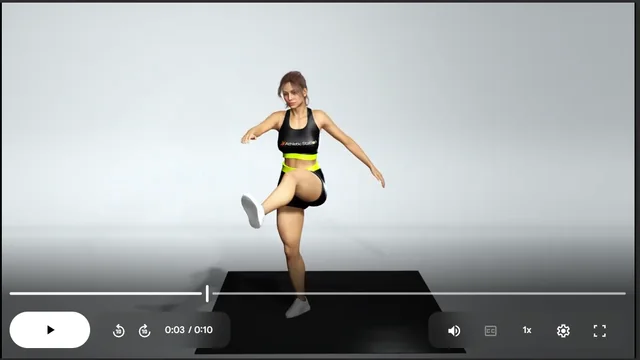
How to perform it
- Stand with your spine upright, abs engaged, and knees slightly bent.
- Keep your body weight over your right leg, which serves as the base of support during the movement.
- Leave your left leg free to perform the lateral lunge with control.
- Move your left leg out to the side with a light jump or airborne shift while keeping your torso stable.
- Land with control, absorbing the impact with the knee of the supporting leg slightly bent.
- Keep your arms in a natural position to help with balance and coordination.
- Avoid allowing the supporting knee to collapse inward or losing hip alignment.
- Exhale during the lunge and maintain rhythmic breathing as you return to the starting position.
What you should feel
Work in the quadriceps, glutes, calves, and core, with a strong demand for lateral balance and coordination. The effort should remain controlled through the legs, without pain in the knees, ankles, hips, or lower back.
Groups mentioned in the description
Exercise questions
Stand with your spine upright, abs engaged, and knees slightly bent. Keep your body weight over your right leg, which serves as the base of support during the movement. Leave your left leg free to perform the lateral lunge with control. Move your left leg out to the side with a light jump or airborne shift while keeping your torso stable. Land with control, absorbing the impact with the knee of the supporting leg slightly bent. Keep your arms in a natural position to help with balance and coordination. Avoid allowing the supporting knee to collapse inward or losing hip alignment. Exhale during the lunge and maintain rhythmic breathing as you return to the starting position.
Dynamic lunge variation that works the core, quadriceps, glutes, and calves while requiring coordination, balance, and control during the change of support.
Work in the quadriceps, glutes, calves, and core, with a strong demand for lateral balance and coordination. The effort should remain controlled through the legs, without pain in the knees, ankles, hips, or lower back.
The guidance above organizes the content from the Athletic Station exercise base. Adapt the movement to your individual condition and stop if you experience pain.