
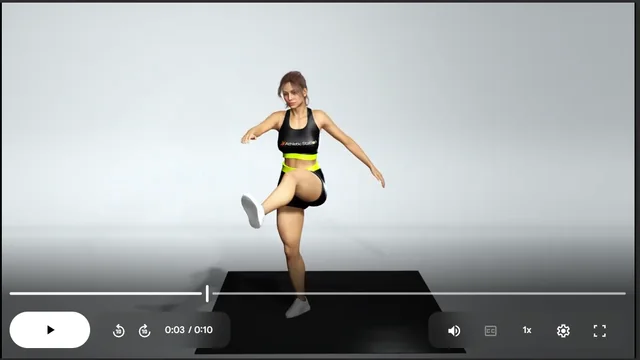
How to perform it
- Stand upright with your abs engaged and your feet hip-width apart.
- Place your hands on your waist or in a comfortable position to help with stability.
- Keep your knees slightly extended without fully locking the joints.
- Begin by raising your heels off the floor, coming onto the balls of your feet with control.
- Rise to a comfortable range of motion while focusing the effort on your calves.
- Briefly hold the contraction at the highest point of the movement.
- Slowly return to the starting position, lowering your heels with control until they touch the floor.
- Exhale as you rise and inhale as you lower.
What you should feel
Greater activation of the calves, with localized effort in the back of the lower legs. The contraction should remain controlled during both the rise and the descent, without pain in the ankles, knees, or soles of the feet.
Groups mentioned in the description
Exercise questions
Stand upright with your abs engaged and your feet hip-width apart. Place your hands on your waist or in a comfortable position to help with stability. Keep your knees slightly extended without fully locking the joints. Begin by raising your heels off the floor, coming onto the balls of your feet with control. Rise to a comfortable range of motion while focusing the effort on your calves. Briefly hold the contraction at the highest point of the movement. Slowly return to the starting position, lowering your heels with control until they touch the floor. Exhale as you rise and inhale as you lower.
Heel raise to work the calves with control during both the upward and return phases.
Greater activation of the calves, with localized effort in the back of the lower legs. The contraction should remain controlled during both the rise and the descent, without pain in the ankles, knees, or soles of the feet.
The guidance above organizes the content from the Athletic Station exercise base. Adapt the movement to your individual condition and stop if you experience pain.