
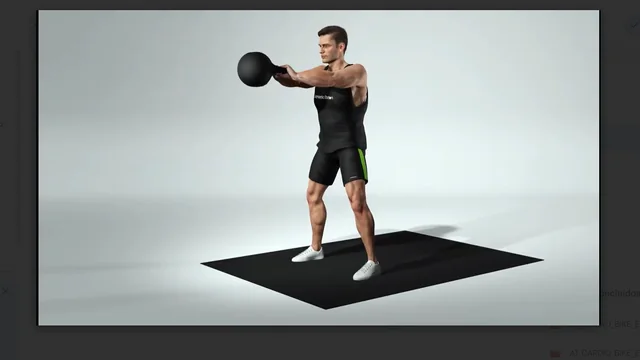
How to perform it
- Lie face down on a mat with your legs extended and feet relaxed.
- Place your hands behind your head, keeping your elbows comfortably open.
- Lightly engage your abs and glutes to stabilize your body during the movement.
- Gently raise your torso, lifting your chest slightly off the floor without straining your neck.
- Keep your gaze directed downward throughout the set to preserve cervical spine alignment.
- Return slowly to the starting position with control.
- Exhale as you raise your torso and inhale as you return.
- Repeat through a comfortable range of motion without causing pain or compression in the lower back.
What you should feel
Work in the lower back, glutes, and muscles along the back of the torso. The spinal extension should remain controlled, without pain in the lower back or neck.
Groups mentioned in the description
Exercise questions
Lie face down on a mat with your legs extended and feet relaxed. Place your hands behind your head, keeping your elbows comfortably open. Lightly engage your abs and glutes to stabilize your body during the movement. Gently raise your torso, lifting your chest slightly off the floor without straining your neck. Keep your gaze directed downward throughout the set to preserve cervical spine alignment. Return slowly to the starting position with control. Exhale as you raise your torso and inhale as you return. Repeat through a comfortable range of motion without causing pain or compression in the lower back.
Controlled trunk extension that works the glutes and lower back while avoiding excessive range of motion in the lumbar spine.
Work in the lower back, glutes, and muscles along the back of the torso. The spinal extension should remain controlled, without pain in the lower back or neck.
The guidance above organizes the content from the Athletic Station exercise base. Adapt the movement to your individual condition and stop if you experience pain.