
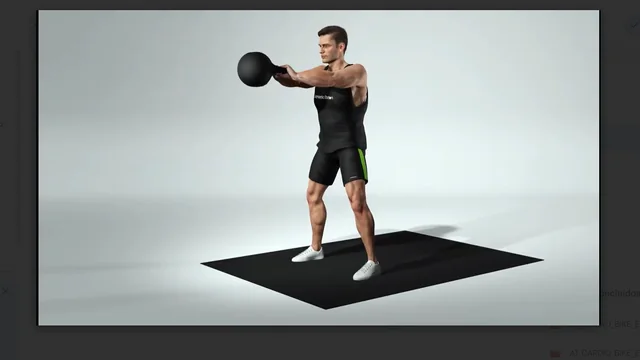
How to perform it
- Stand with your feet shoulder-width apart, holding the kettlebell with both hands in front of your body.
- Keep your spine upright, abs engaged, and shoulders stable throughout the movement.
- Slightly bend your knees and drive your hips back, guiding the kettlebell between your legs with control.
- Then extend your hips powerfully, driving the kettlebell forward to about chest height or as high as you can maintain control.
- Let your arms follow the swing rather than using your shoulders as the main source of force.
- Guide the kettlebell back between your legs and repeat continuously while maintaining rhythm and stability.
- Exhale during the upward phase and inhale as the kettlebell returns.
- Throughout the set, avoid rounding your lower back or turning the movement into an excessive squat.
What you should feel
Greater activation of the glutes, hamstrings, and core during hip extension. The movement should feel powerful and controlled, without pain in the lower back, shoulders, or wrists.
Groups mentioned in the description
Exercise questions
Stand with your feet shoulder-width apart, holding the kettlebell with both hands in front of your body. Keep your spine upright, abs engaged, and shoulders stable throughout the movement. Slightly bend your knees and drive your hips back, guiding the kettlebell between your legs with control. Then extend your hips powerfully, driving the kettlebell forward to about chest height or as high as you can maintain control. Let your arms follow the swing rather than using your shoulders as the main source of force. Guide the kettlebell back between your legs and repeat continuously while maintaining rhythm and stability. Exhale during the upward phase and inhale as the kettlebell returns. Throughout the set, avoid rounding your lower back or turning the movement into an excessive squat.
Swing driven by hip extension to work the core, glutes, and hamstrings while using the arms mainly to guide the movement.
Greater activation of the glutes, hamstrings, and core during hip extension. The movement should feel powerful and controlled, without pain in the lower back, shoulders, or wrists.
The guidance above organizes the content from the Athletic Station exercise base. Adapt the movement to your individual condition and stop if you experience pain.