
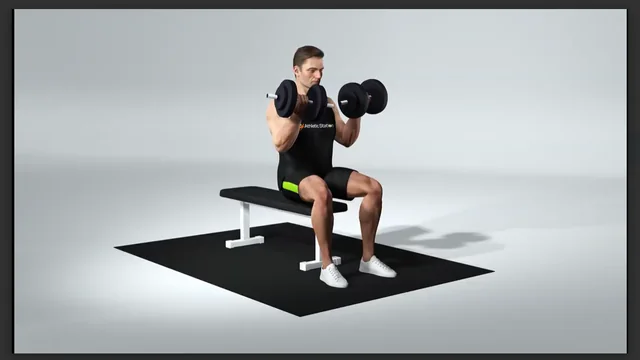
How to perform it
- Stand with your feet shoulder-width apart and a dumbbell in each hand at your sides.
- Keep your spine upright, abs engaged, chest open, and elbows close to your torso.
- Bend one elbow to raise the dumbbell toward your shoulder.
- Keep your wrist firm and the movement controlled throughout the lift.
- Lower the dumbbell slowly to the starting position.
- Then repeat with the other arm, continuously alternating sides.
- Avoid swinging your torso or using body momentum to assist the movement.
- Exhale as you raise the dumbbell and inhale as you lower.
What you should feel
Work in the biceps, with the forearms and core assisting with postural stabilization. The effort should remain controlled through the front of the arms, without pain in the wrists, elbows, shoulders, or lower back.
Groups mentioned in the description
Exercise questions
Stand with your feet shoulder-width apart and a dumbbell in each hand at your sides. Keep your spine upright, abs engaged, chest open, and elbows close to your torso. Bend one elbow to raise the dumbbell toward your shoulder. Keep your wrist firm and the movement controlled throughout the lift. Lower the dumbbell slowly to the starting position. Then repeat with the other arm, continuously alternating sides. Avoid swinging your torso or using body momentum to assist the movement. Exhale as you raise the dumbbell and inhale as you lower.
Elbow flexion exercise that works the core, biceps, and forearms while keeping the arms and torso stable throughout each repetition.
Work in the biceps, with the forearms and core assisting with postural stabilization. The effort should remain controlled through the front of the arms, without pain in the wrists, elbows, shoulders, or lower back.
The guidance above organizes the content from the Athletic Station exercise base. Adapt the movement to your individual condition and stop if you experience pain.