
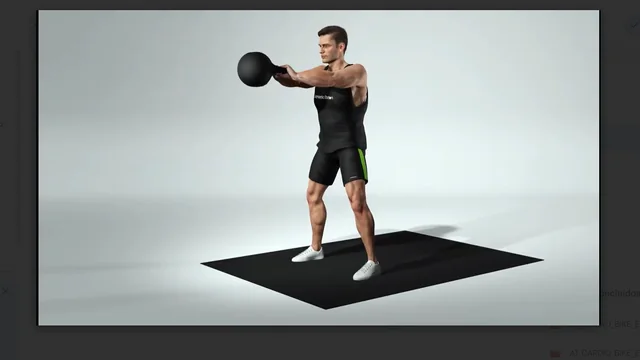
How to perform it
- Stand with your feet shoulder-width apart and hold the bar in front of your legs.
- Keep your spine aligned, abs engaged, and chest open throughout the movement.
- Keep your legs straight or maintain a slight natural bend without turning the movement into a squat.
- Push your hips back and lean your torso forward with control.
- Lower the bar close to your legs while keeping your shoulders stable and your lower back neutral.
- Continue through a comfortable range while feeling a stretch in the hamstrings.
- Drive your hips forward to return to the starting position while keeping the bar stable and close to your body.
- Exhale as you rise and inhale as you lower.
What you should feel
Greater activation of the hamstrings, glutes, lower back, and core, with a strong stretch through the posterior chain. The effort should remain controlled through the back of the legs and torso, without pain in the lower back, knees, shoulders, or neck.
Groups mentioned in the description
Exercise questions
Stand with your feet shoulder-width apart and hold the bar in front of your legs. Keep your spine aligned, abs engaged, and chest open throughout the movement. Keep your legs straight or maintain a slight natural bend without turning the movement into a squat. Push your hips back and lean your torso forward with control. Lower the bar close to your legs while keeping your shoulders stable and your lower back neutral. Continue through a comfortable range while feeling a stretch in the hamstrings. Drive your hips forward to return to the starting position while keeping the bar stable and close to your body. Exhale as you rise and inhale as you lower.
Hip-hinge movement that works the core, glutes, hamstrings, and lower back while keeping the spine aligned and the load close to the body.
Greater activation of the hamstrings, glutes, lower back, and core, with a strong stretch through the posterior chain. The effort should remain controlled through the back of the legs and torso, without pain in the lower back, knees, shoulders, or neck.
The guidance above organizes the content from the Athletic Station exercise base. Adapt the movement to your individual condition and stop if you experience pain.