
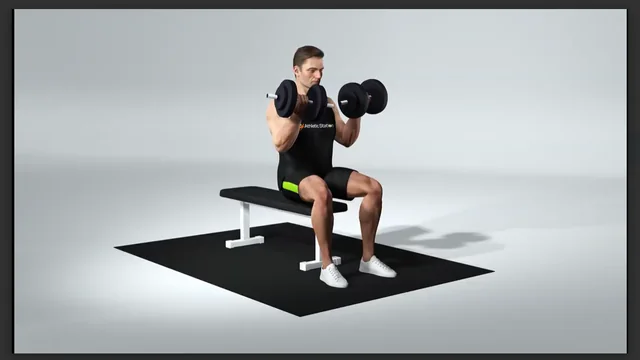
How to perform it
- Sit on the bench with your spine upright, feet supported on the floor, and a dumbbell in each hand.
- Keep your arms at your sides with your elbows close to your torso throughout the set.
- Bend your elbows and raise the dumbbells with control.
- Lift the weights without swinging your torso or using momentum to assist the movement.
- Contract your biceps at the top while maintaining control of the load.
- Lower the dumbbells slowly to the starting position, extending your arms without losing posture.
What you should feel
Direct biceps contraction during the lift and controlled effort during the descent. Light forearm activation to stabilize the load, without pain in the wrists, shoulders, or lower back.
Groups mentioned in the description
Exercise questions
Sit on the bench with your spine upright, feet supported on the floor, and a dumbbell in each hand. Keep your arms at your sides with your elbows close to your torso throughout the set. Bend your elbows and raise the dumbbells with control. Lift the weights without swinging your torso or using momentum to assist the movement. Contract your biceps at the top while maintaining control of the load. Lower the dumbbells slowly to the starting position, extending your arms without losing posture.
Elbow flexion exercise that works the biceps while keeping the arms and torso stable throughout each repetition.
Direct biceps contraction during the lift and controlled effort during the descent. Light forearm activation to stabilize the load, without pain in the wrists, shoulders, or lower back.
The guidance above organizes the content from the Athletic Station exercise base. Adapt the movement to your individual condition and stop if you experience pain.