
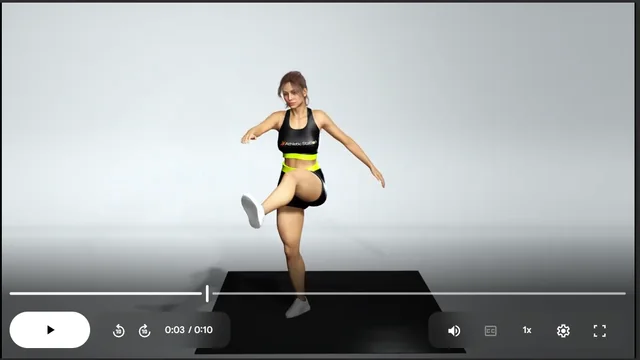
How to perform it
- Stand upright with your abs engaged and your feet hip-width apart.
- Extend your arms in front of your body and position your hands at a comfortable height to serve as a target.
- Begin by raising one knee toward your hands with control.
- Touch or bring the knee close to your hands without excessively rounding your torso.
- Return the leg to the floor with control and repeat on the opposite side.
- Keep your torso stable and your supporting leg firm throughout the movement.
- Alternate sides at a steady pace without using excessive momentum.
- Exhale as you raise the knee and inhale as you return.
What you should feel
Work in the abs, hip flexors, and legs, with core participation for stabilization. The effort should remain controlled through balance and coordination, without pain in the lower back, hips, or knees.
Groups mentioned in the description
Exercise questions
Stand upright with your abs engaged and your feet hip-width apart. Extend your arms in front of your body and position your hands at a comfortable height to serve as a target. Begin by raising one knee toward your hands with control. Touch or bring the knee close to your hands without excessively rounding your torso. Return the leg to the floor with control and repeat on the opposite side. Keep your torso stable and your supporting leg firm throughout the movement. Alternate sides at a steady pace without using excessive momentum. Exhale as you raise the knee and inhale as you return.
Rhythmic knee raises to work the abs, hip flexors, and legs while combining coordination, stability, and body control.
Work in the abs, hip flexors, and legs, with core participation for stabilization. The effort should remain controlled through balance and coordination, without pain in the lower back, hips, or knees.
The guidance above organizes the content from the Athletic Station exercise base. Adapt the movement to your individual condition and stop if you experience pain.