
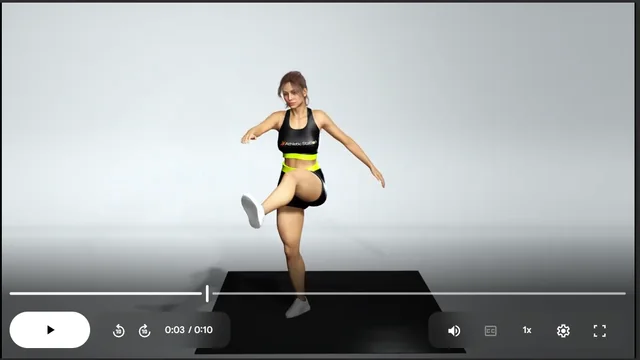
How to perform it
- Position yourself on all fours on the mat, with your hands directly below your shoulders and your knees below your hips.
- Keep your spine neutral, abs engaged, and gaze directed toward the floor throughout the movement.
- Keep one knee supported on the floor and bend the other knee to approximately 90 degrees.
- Raise the working leg backward and upward with control, as if pressing the ceiling with the sole of your foot.
- Keep the knee bent throughout the exercise and avoid excessively arching your lower back.
- Lift through a comfortable range of motion while focusing the effort on the glutes.
- Slowly return to the starting position, bringing the knee back with control without striking the floor.
- Exhale as you raise the leg and inhale as you return.
What you should feel
Greater glute activation, with secondary involvement of the hamstrings and core for stabilization. The effort should remain controlled around the hip, without pain in the lower back, knees, or hips.
Groups mentioned in the description
Exercise questions
Position yourself on all fours on the mat, with your hands directly below your shoulders and your knees below your hips. Keep your spine neutral, abs engaged, and gaze directed toward the floor throughout the movement. Keep one knee supported on the floor and bend the other knee to approximately 90 degrees. Raise the working leg backward and upward with control, as if pressing the ceiling with the sole of your foot. Keep the knee bent throughout the exercise and avoid excessively arching your lower back. Lift through a comfortable range of motion while focusing the effort on the glutes. Slowly return to the starting position, bringing the knee back with control without striking the floor. Exhale as you raise the leg and inhale as you return.
Quadruped hip extension that works the core, glutes, and hamstrings while keeping the torso stable as the leg is raised.
Greater glute activation, with secondary involvement of the hamstrings and core for stabilization. The effort should remain controlled around the hip, without pain in the lower back, knees, or hips.
The guidance above organizes the content from the Athletic Station exercise base. Adapt the movement to your individual condition and stop if you experience pain.