
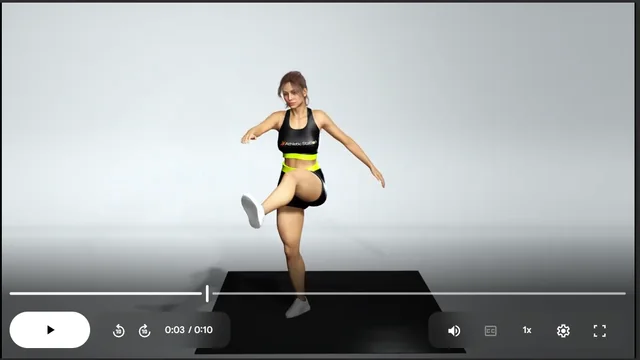
How to perform it
- Stand upright with your abs engaged and your gaze forward.
- Keep your left leg planted on the floor as the base of support throughout the set.
- Keep your right leg extended or slightly bent, ready to perform the lateral raise.
- Raise your right leg out to the side in a controlled motion.
- Keep your torso stable and avoid leaning excessively to compensate for the leg raise.
- Raise to a comfortable range of motion while focusing the effort on the side of the hip.
- Slowly return to the starting position without letting the leg drop.
- Exhale as you raise the leg and inhale as you return.
What you should feel
Work in the lateral hip muscles and glutes, with core participation for stabilization. The effort should remain controlled through balance and the side of the leg, without pain in the hip, knee, or lower back.
Groups mentioned in the description
Exercise questions
Stand upright with your abs engaged and your gaze forward. Keep your left leg planted on the floor as the base of support throughout the set. Keep your right leg extended or slightly bent, ready to perform the lateral raise. Raise your right leg out to the side in a controlled motion. Keep your torso stable and avoid leaning excessively to compensate for the leg raise. Raise to a comfortable range of motion while focusing the effort on the side of the hip. Slowly return to the starting position without letting the leg drop. Exhale as you raise the leg and inhale as you return.
Right-side lateral leg raise to work the core and glutes while keeping the torso stable and the movement controlled.
Work in the lateral hip muscles and glutes, with core participation for stabilization. The effort should remain controlled through balance and the side of the leg, without pain in the hip, knee, or lower back.
The guidance above organizes the content from the Athletic Station exercise base. Adapt the movement to your individual condition and stop if you experience pain.