
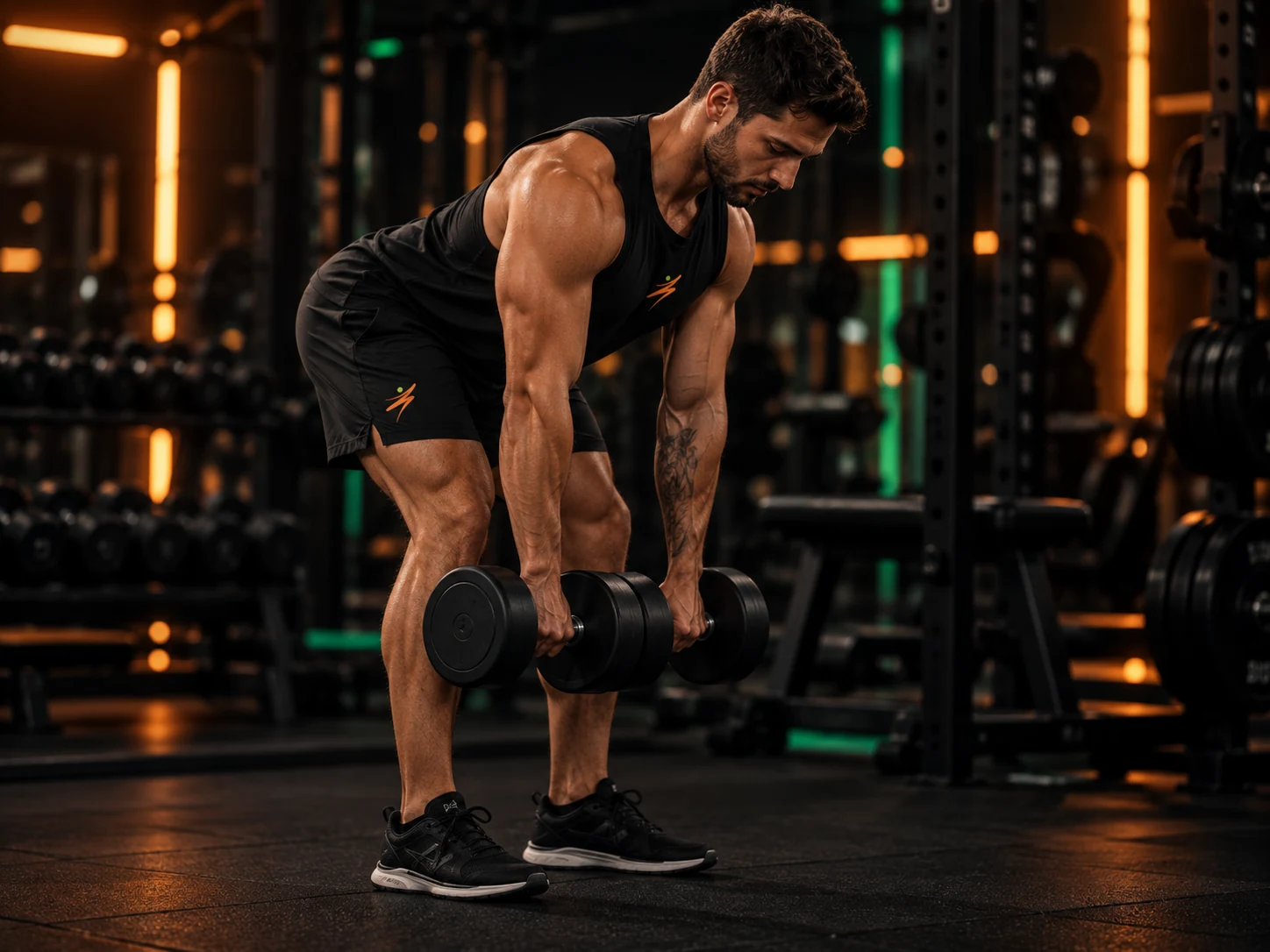
How to perform it
Stand with a dumbbell in each hand in front of your legs. Push your hips back with a slight knee bend and lean forward without rounding your lower back. Keep the dumbbells close to your legs, then drive your hips forward to return.
Muscles involved
Glutes and hamstrings contribute strongly to hip extension. The core and lower back help stabilize, while the forearms support the load.
Common mistakes
Turning the movement into a squat, letting the dumbbells drift away from the body, rounding the lower back or using more range of motion than your mobility allows.
Range and control
Lower only as far as you can while keeping a stable spine and controlled movement.
Frequently asked questions
Does the dumbbell deadlift work the hamstrings?
Yes. The hamstrings contribute strongly during the hip-hinge pattern.
Do the dumbbells need to touch the floor?
Not necessarily. Range of motion should match your technique and mobility.
How is it different from a squat?
The deadlift emphasizes the hip hinge and moving the hips backward rather than a deep knee-dominant squat.